The city of Mathura calls devotion through what is made, handled, stitched, and sold. It hangs in small shops as brightly coloured poshaks, rests in the careful symmetry of jhulas, and takes shape in the ornate detailing of singhaasans created for Krishna. Walking through these narrow lanes, one notices how deeply faith and labour are intertwined here.
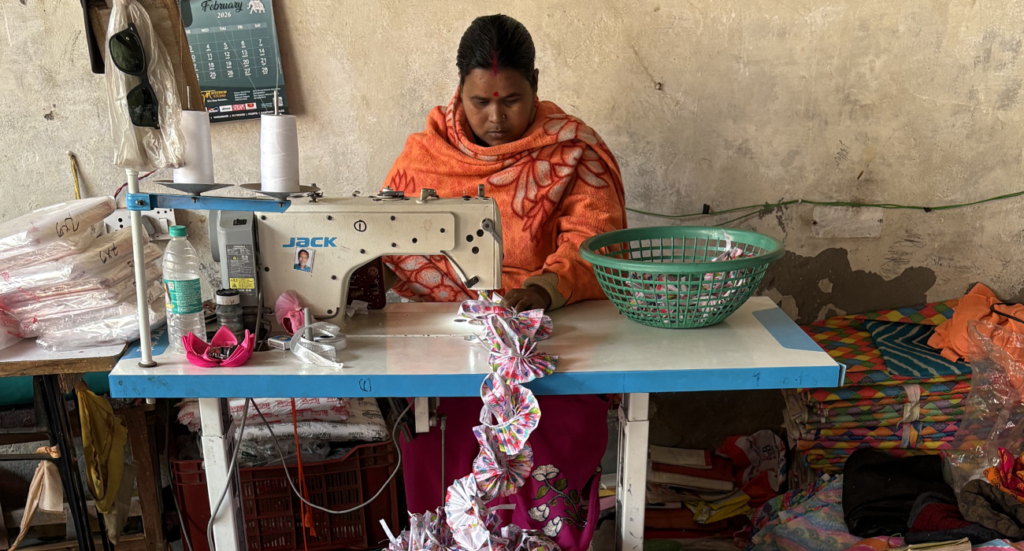
What appears, at first glance, as a marketplace of religious objects slowly reveals itself as a dense artisan cluster. Small workshops double up as storefronts; families work within arm’s reach of each other; skills are passed down quietly, without formal documentation. There is rhythm here—of hands moving, fabrics being measured, embellishments being fixed into place.
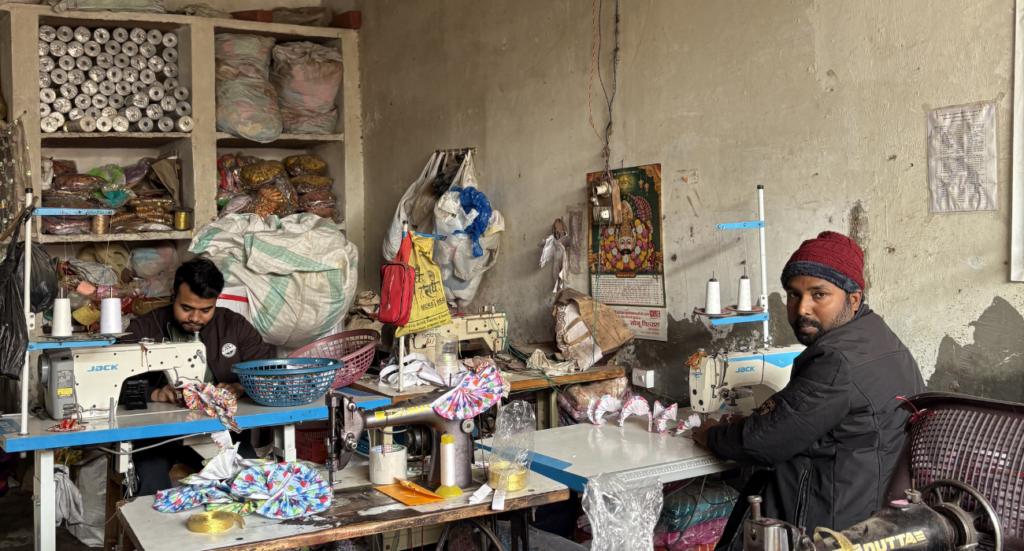
In one such shop, I met Shyam Das, a poshak maker. His workspace was modest but full of activity, with stacks of fabric, trays of sequins, and partially finished Laddu Gopal Poshak arranged neatly. Spending time in this cluster shows that much of the work operates on thin margins and informal systems. Demand changes with pilgrimage seasons. Production depends on time, labour, and access to materials. Growth is often limited not by skill, but by lack of resources.
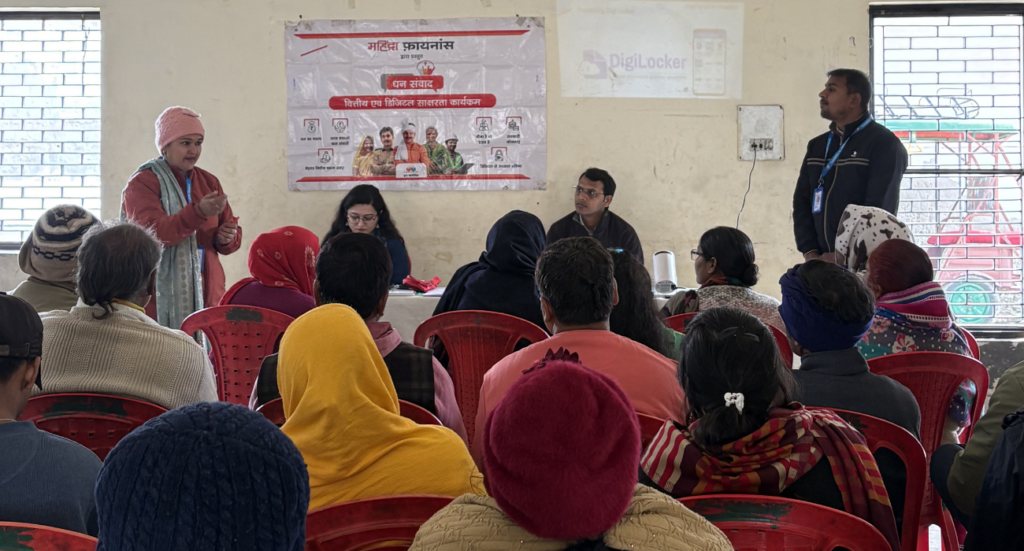
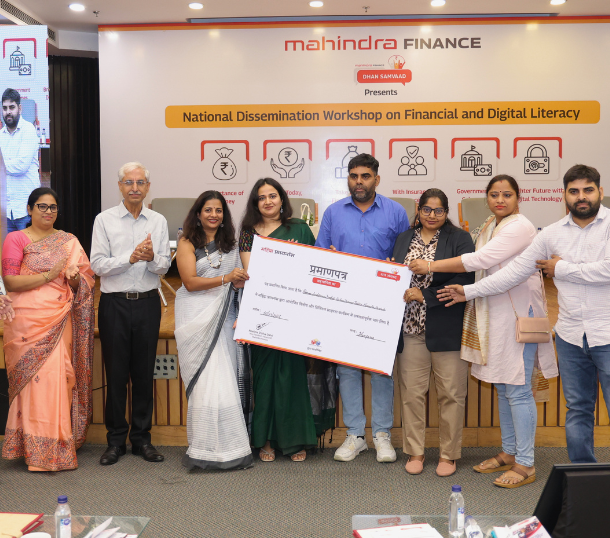
Shyam Das recently invested in new machinery after receiving financial support and guidance through Mahindra Finance’s Dhan Samvaad initiative. This has not changed the nature of his craft, which remains detailed and manual. However, it has improved the pace of his work. Production is faster, output has increased, and he is able to take on more orders.
Spending time here also changed how I think about ideas like “sustainability” or “development.” In places like Mathura, these aren’t big concepts—they show up in everyday concerns. Can an artisan get enough orders this month? Can they afford better tools? Can they keep their work going in the long run? Change here doesn’t happen in big, dramatic ways. It’s gradual. For instance, a new machine that saves tim; a slightly bigger order during the festive season; Better awareness of how to access loans or schemes. Small things, but they add up.
The work itself remains the same—detailed, manual, and rooted in tradition. But the conditions around it can improve, and that makes a difference.
More than anything, this visit made me realise that behind every poshak or jhula is not just faith, but a person trying to make a living. Supporting these crafts isn’t only about preserving tradition, it’s also about making sure the people doing the work have the means to continue.