Demonstrating decarbonisation pathways through pilots in textile
By fmadmin
Demonstrating decarbonisation pathways through pilots in textile small and medium enterprises (SMEs)
Project Synopsis
Across India, small and medium textile enterprises form the backbone of local economies, employment, and exports. Yet, as global markets increasingly demand sustainability and climate responsibility, many of these enterprises face challenges in adapting to greener production practices.
With support from HSBC and in collaboration with the Centre for Responsible Business (CRB), this initiative by the Foundation for MSME Clusters (FMC) is enabling textile MSMEs in Panipat—one of India’s largest textile recycling hubs—to transition towards low-carbon, environmentally responsible growth. By combining technical guidance, capacity building, financing linkages, and ecosystem collaboration, the project demonstrates that sustainability can be both practical and profitable.
Pre-Intervention Situation
Panipat has long been known as a centre for textile recycling and home furnishings. The cluster supports thousands of workers, many from economically vulnerable communities, and plays a vital role in India’s circular textile economy.
However, most enterprises relied heavily on conventional energy sources and had limited awareness of emerging sustainability regulations, green technologies, and financing opportunities. As global buyers began prioritising low-carbon supply chains, many MSMEs faced the risk of losing market access without structured support to transition.
Challenges Faced
The transition towards greener production was not straightforward. MSMEs encountered several barriers:
Limited technical knowledge about decarbonisation solutions
Difficulty accessing affordable green technologies and financing
Skills gaps in adopting sustainable production practices
Fragmented ecosystem support and policy awareness
Concerns about costs and business risks associated with change
These challenges underscored the need for a comprehensive, ecosystem-driven approach rather than isolated interventions.
Our Approach
What distinguishes this initiative is FMC’s ecosystem-driven, implementation-first approach, moving beyond awareness to on-ground transformation.
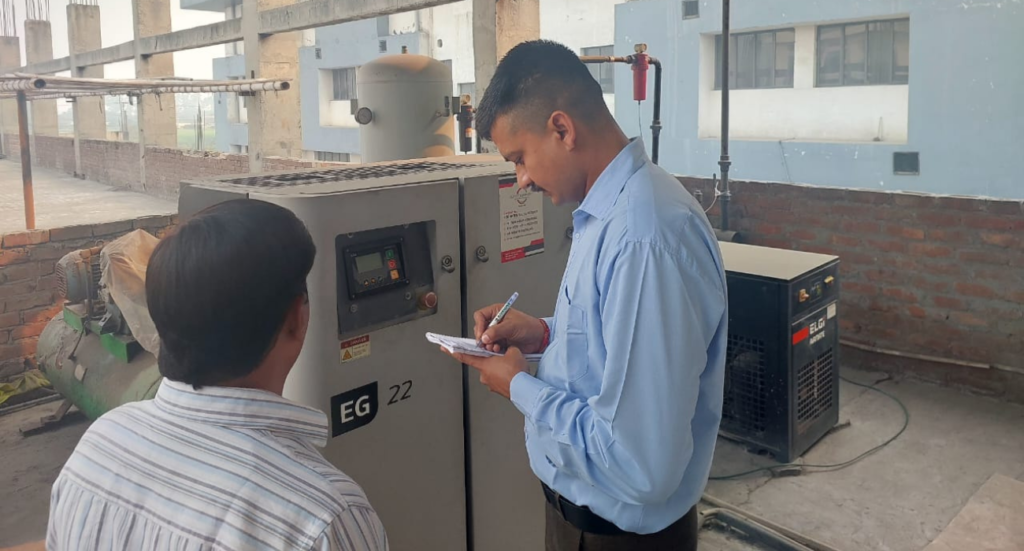
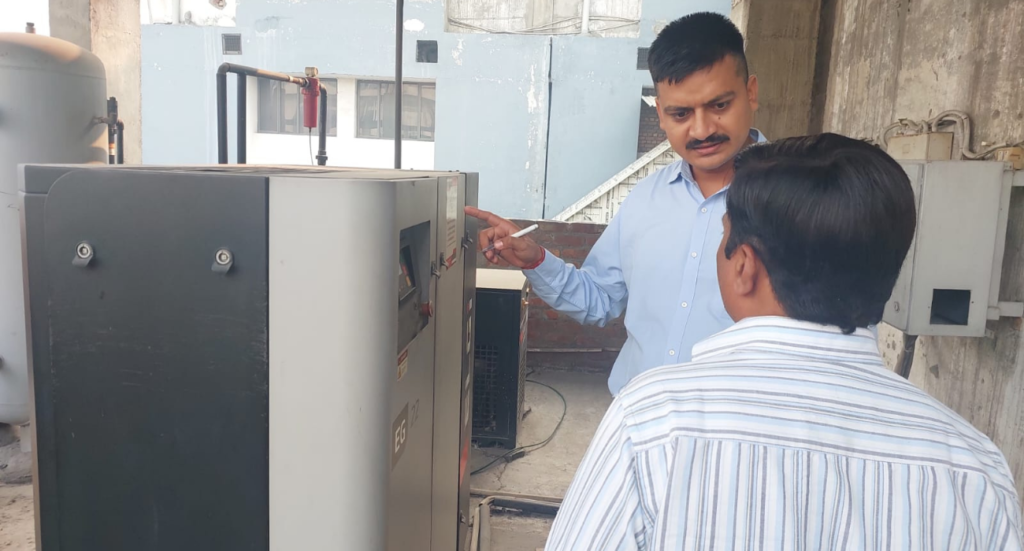
The project engaged 40 MSMEs, with 16 enterprises receiving intensive, hands-on support through diagnostic assessments, GHG accounting, customised decarbonisation plans, technology linkages, and facilitation of green finance. The remaining units were supported through shared learnings and targeted handholding.
A strong ecosystem was built by connecting MSMEs with technology providers, financial institutions, and policy stakeholders, ensuring that solutions were not only technically viable but also financially accessible.
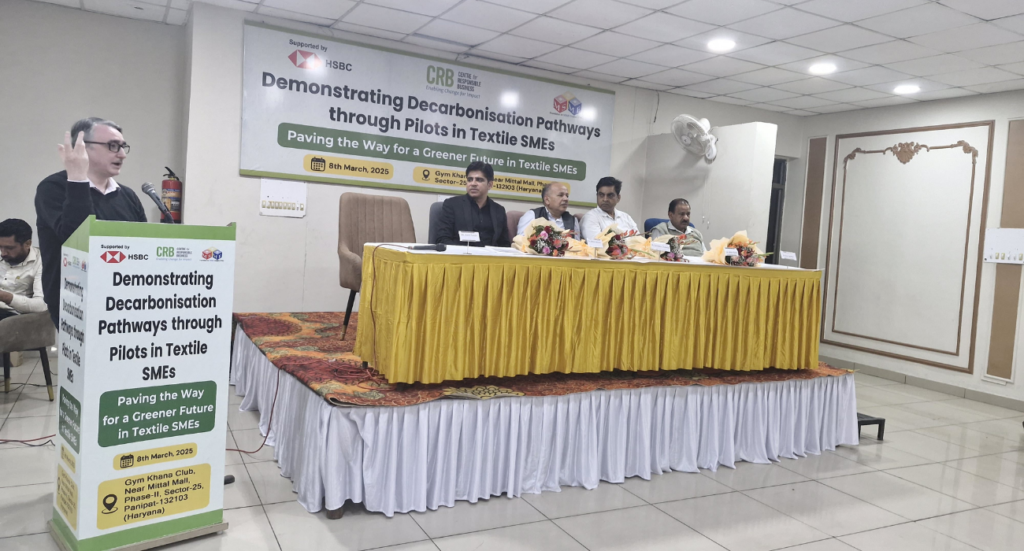
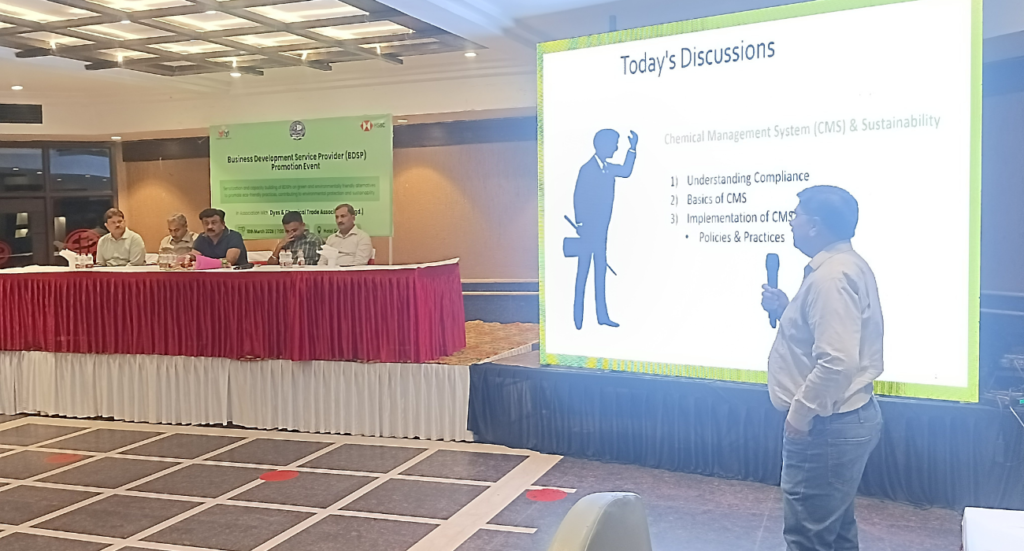
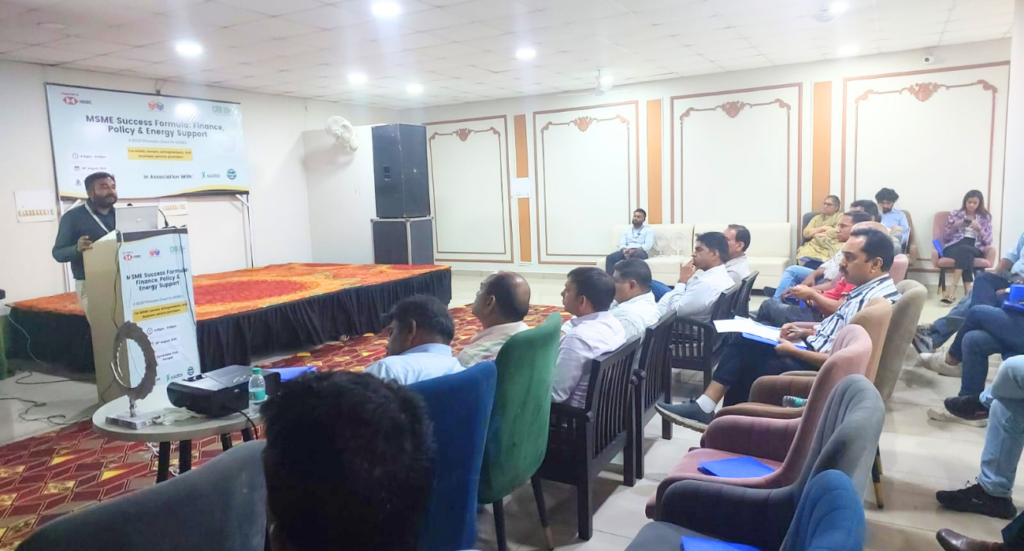
In addition, BDSP promotion events and Cluster Samvad played a critical role in strengthening the ecosystem—bringing together enterprises, experts, and institutions. These engagements sensitised 215 enterprises, triggering interest in energy audits, solar adoption, digitalisation, and cleaner production processes.
The approach also emphasised peer learning, inclusion of women workers in green skilling, and dissemination of practical insights—ensuring both immediate adoption and long-term sustainability.
Methodology
The initiative followed a structured yet flexible pathway:
Understanding the Cluster Diagnostic studies, consultations, and awareness programmes helped enterprises recognise sustainability challenges and opportunities.
Designing Practical Solutions Emission assessments, skill mapping, and customised decarbonisation plans enabled enterprises to identify feasible, cost-effective improvements.
Piloting Change on the Ground Selected MSMEs implemented decarbonisation measures with technical support, financial facilitation, and continuous handholding.
Sharing Knowledge for Wider Impact Learnings, case studies, and policy insights were disseminated to encourage replication across clusters.
Impact of the Project
The initiative has delivered strong, measurable outcomes, demonstrating that decarbonisation can drive both environmental and economic gains for MSMEs.
Projected reduction of 5,655.60 tonnes of CO₂ emissions annually
₹39.94 crore worth of bankable green financing proposals developed
₹6.47 crore in annual cost savings unlocked across participating enterprises
At the enterprise level, 40 MSMEs were directly engaged, with 16 units undergoing deep-dive interventions and the rest benefiting through knowledge transfer and handholding.
The impact extended beyond enterprises:
10+ Business Development Service Providers (BDSPs) gained new business opportunities in sustainability services
Nearly 1,000 ecosystem stakeholders—including policymakers, buyers, and suppliers—benefited from emerging insights on low-carbon growth
Importantly, the project translated awareness into action, with MSMEs actively exploring energy efficiency, renewable energy adoption, and cleaner production processes, strengthening both compliance and competitiveness in global markets.