

Textile hub eyes ₹750cr waste-fabric overhaul, Times of India, Ludhiana
By fmadmin
By Gurvinder Singh | The Times of India
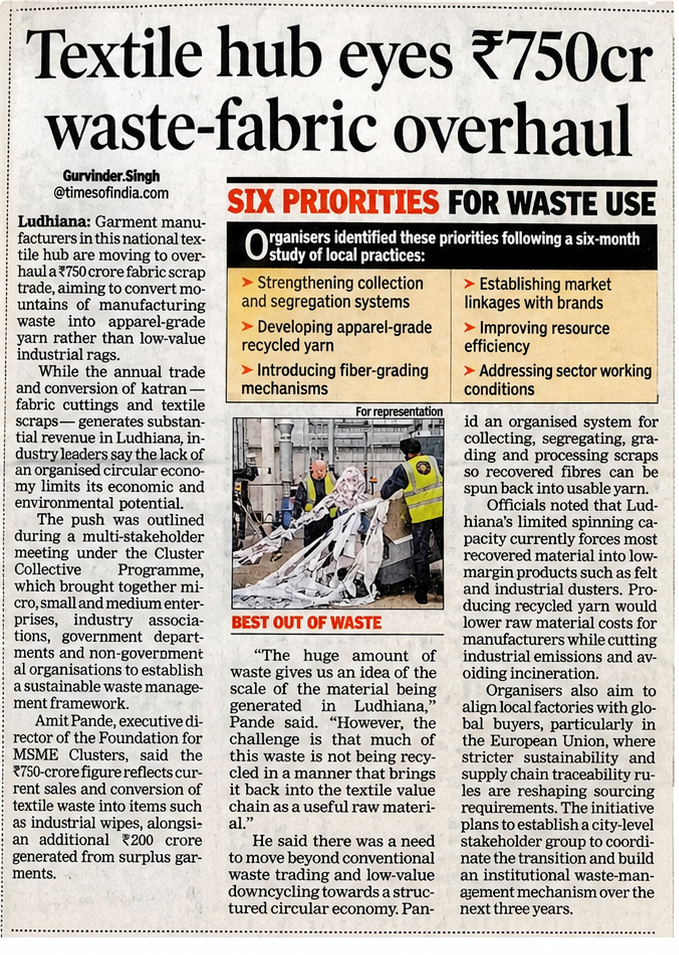
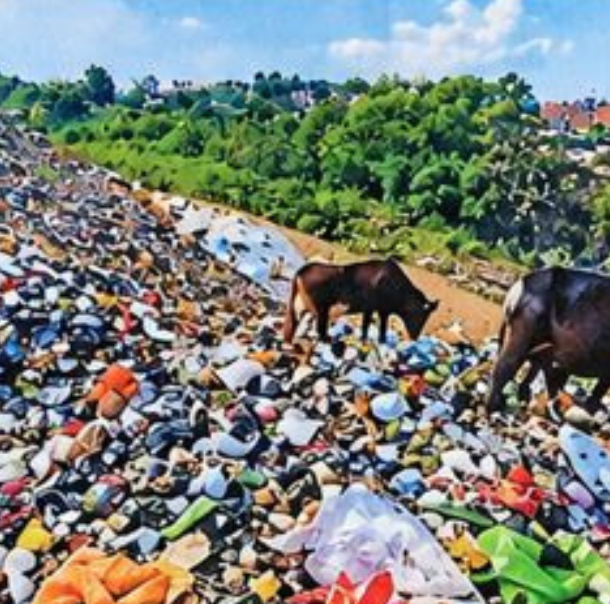
Ludhiana: Garment manufacturers in this national textile hub are moving to overhaul a ₹750 crore fabric scrap trade, aiming to convert mountains of manufacturing waste into apparel-grade yarn rather than low-value industrial rags.
While the annual trade and conversion of katran — fabric cuttings and textile scraps — generates substantial revenue in Ludhiana, industry leaders say the lack of an organised circular economy limits its economic and environmental potential.
The push was outlined during a multi-stakeholder meeting under the Cluster Collective Programme, which brought together micro, small and medium enterprises, industry associations, government departments and non-governmental organisations to establish a sustainable waste management framework.
Amit Pande, Executive Director of the Foundation for MSME Clusters, said the ₹750-crore figure reflects current sales and conversion of textile waste into items such as industrial wipes, alongside an additional ₹200 crore generated from surplus garments.
“The huge amount of waste gives us an idea of the scale of the material being generated in Ludhiana,” Pande said. “However, the challenge is that much of this waste is not being recycled in a manner that brings it back into the textile value chain as a useful raw material.”
He said there was a need to move beyond conventional waste trading and low-value downcycling towards a structured circular economy. Pande said an organised system for collecting, segregating, grading and processing scraps could ensure recovered fibres are spun back into usable yarn.
Officials noted that Ludhiana’s limited spinning capacity currently forces most recovered material into low-margin products such as felt and industrial dusters. Producing recycled yarn would lower raw material costs for manufacturers while cutting industrial emissions and avoiding incineration.
Organisers also aim to align local factories with global buyers, particularly in the European Union, where stricter sustainability and supply chain traceability rules are reshaping sourcing requirements.
The initiative plans to establish a city-level stakeholder group to coordinate the transition and build an institutional waste-management mechanism over the next three years.
