Strengthening market-led value chains of 4 textile artisanal…
By fmadmin
Strengthening market-led value chains of 4 textile artisanal clusters and connect with My E-Haat
Supported by HCL Foundation
Project Synopsis
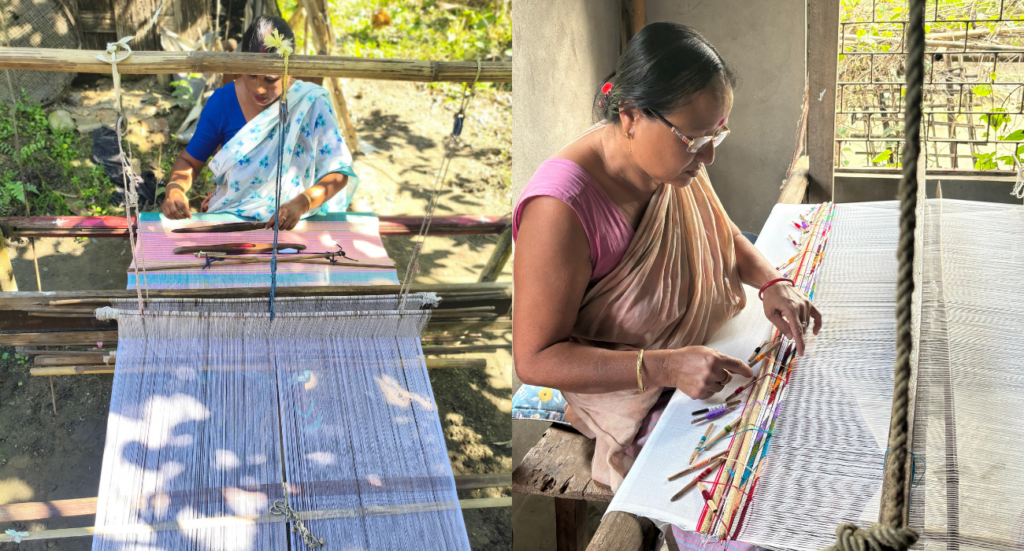
The My E-Haat initiative by HCLFoundation, implemented in partnership with Foundation for MSME Clusters, strengthened market-led value chains across four traditional handloom clusters in India—Pochampally (Telangana), Maheshwar (Madhya Pradesh), Kotpad (Odisha), and Upper Assam.
The project focused on enabling artisans to access sustainable markets through product innovation, digital empowerment, branding, and institutional strengthening. By integrating clusters with My E-Haat and other market channels such as ONDC, Amazon Karigar, and India Handmade, the initiative enhanced product visibility, expanded market access, and created improved income opportunities for artisans. Alongside market interventions, the project also facilitated access to social security schemes and strengthened BMOs to ensure long-term sustainability beyond the project lifecycle.
Pre-Intervention Scenario
India is home to nearly 7 million artisans across more than 3,000 clusters, with around 50% engaged in textile-based crafts. However, most artisans rely on small local and regional markets to sell their products. Only 2–3% of clusters have access to international markets, and less than 10% are connected to national buyers, leaving nearly 90% dependent on irregular and limited demand. Many artisans also lacked knowledge of market trends, digital selling, pricing, and product promotion, while the absence of catalogues, professional product photos, and online presence made it difficult to reach larger markets and attract new customers.
A significant gap exists in:
Market awareness and access to national or global buyers
Understanding of pricing, inventory, and consumer preferences
Digital capabilities, including online selling and product showcasing
Availability of structured marketing collaterals such as catalogues or professional product images
As a result, artisans frequently produced without clear market signals, leading to unsold inventory, blocked working capital, and distress sales at low margins. Additionally, weak institutional capacity of cluster-level organizations limited their ability to aggregate demand and negotiate better market opportunities.
FMC’s Approach
FMC adopted a cluster-based, market-led approach focused on strengthening both demand and supply-side ecosystems while ensuring long-term sustainability through local institution building. By positioning BMOs as key drivers, the project integrated traditional craftsmanship with modern market requirements, leveraged digital platforms for wider outreach, and created convergence between design, branding, and market access.
The intervention followed a structured, multi-pronged methodology across four clusters:
Cluster Mobilization & Baseline Assessment: Identification and engagement of artisans and BMOs across the clusters.
Design & Product Development: Expert-led workshops in Pochampally, Kotpad, Maheshwar, and Dhemaji enabled market-oriented product innovation and artisan capacity building.
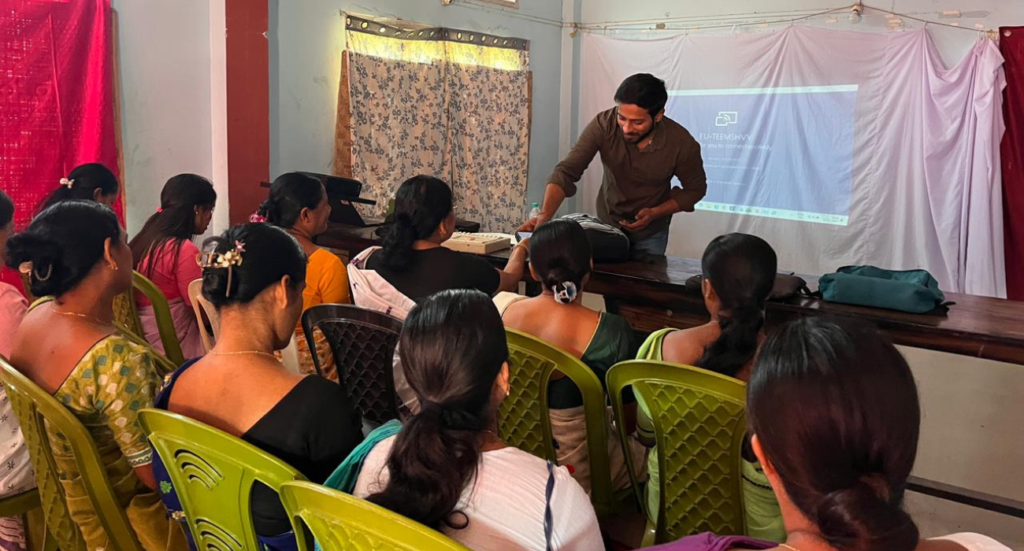
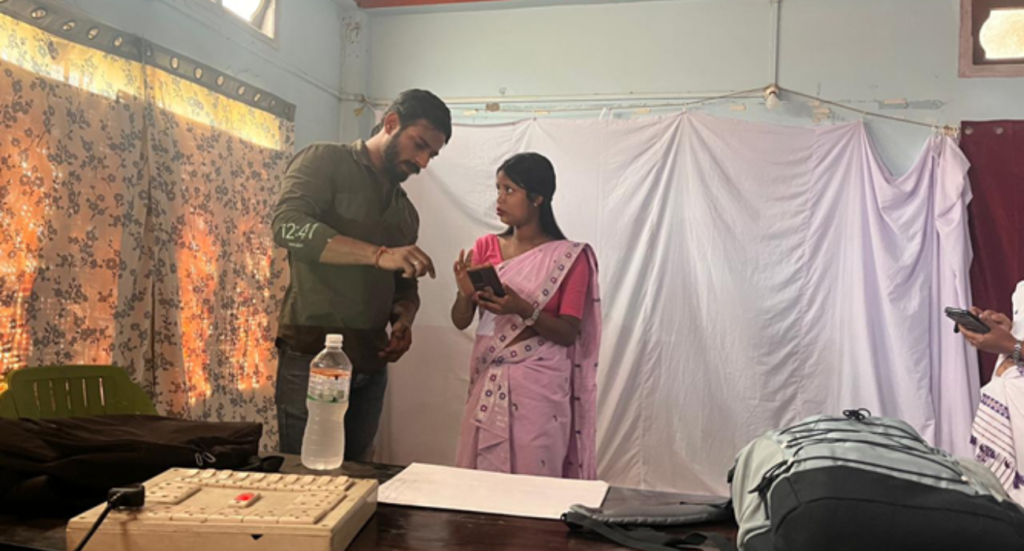
Digital Empowerment: A blended training framework combining in-person sessions, virtual modules, and continuous handholding support strengthened BMO capacities.
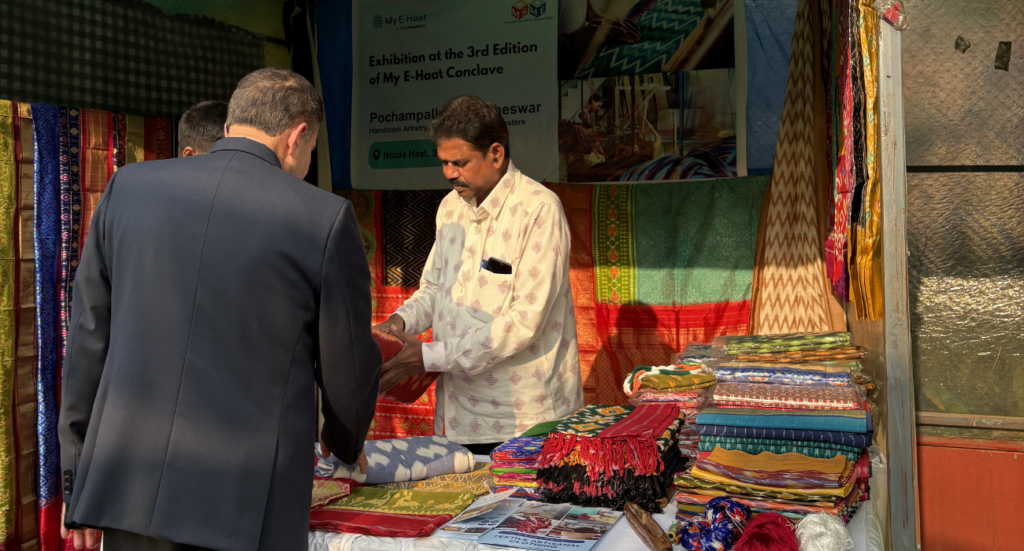
Market Linkages & Branding: Participation in exhibitions, buyer connections, e-catalogues, swatch books, and professional product photoshoots enhanced market outreach and product promotion.
Social Security Integration: Facilitation of access to welfare schemes such as Authorized User (GI), NHDC Yarn Subsidy, Mukhyamantri Barista Bunakar Yojana, and ABHA Health Cards across clusters.
Policy Dissemination & Knowledge Sharing: Workshops and engagements were organized to share best practices and scale learnings across stakeholders.
Key Challenges During the Intervention
The project encountered several systemic and operational challenges:
Digital Readiness of BMO: Limited preparedness of BMOs in documentation, digital coordination, and system adoption required multiple workshops and continuous virtual handholding for onboarding and product listings.
Transition from Traditional to New Designs: Artisans’ long-standing focus on traditional designs required structured design workshops to enable effective adoption of new color palettes and contemporary concepts while retaining authenticity.
Loom Preparation & Production Planning: Efficient loom setup and production planning for new designs demanded additional time and technical alignment, impacting sample development timelines.
Extended Lead Time in Handloom Production: Handloom processes involve a 60-day cycle from design finalization to delivery, which constrained the achievement of targets within shorter reporting periods.
Key Milestones Achieved
Following the intervention, the four handloom clusters transitioned towards a more market-oriented and structured ecosystem, with stronger institutional capacities, improved market access, and enhanced artisan participation in digital and formal value chains.
Key achievements include:
Four clusters were linked with multiple market channels including wholesalers, exporters, exhibitions, e-commerce marketplaces, and My E-Haat, resulting in cumulative market linkages worth ₹3 million.
A total of 50 new designs and 200 market-aligned product samples were developed with active participation from 19 artisans, strengthening product innovation and diversification.
Four BMOs were onboarded onto digital platforms such as My E-Haat, ONDC, Amazon Karigar, and India Handmade, resulting in 549 product listings, 50 social media promotions, and improved direct market access.
Extensive digital capacity-building efforts included 72 hours of physical training, 48 hours of virtual sessions, 160 hours of self-practice, and continuous handholding support across clusters.
Professional photoshoots for over 200 products, along with e-catalogues and swatch books, enhanced product visibility, branding, and buyer engagement.
Social security linkages were facilitated for 200 artisans, enabling access to schemes such as Authorized User (GI), NHDC Yarn Subsidy, Mukhyamantri Barista Bunakar Yojana, and ABHA Health Cards.
A national-level Policy Dissemination Session was organized through the FMC Annual BMO Award Programme to promote knowledge sharing and stakeholder engagement.
Overall, the intervention strengthened cluster-level value chains by integrating design, production, branding, and market access, while enabling artisans to better respond to market trends, improve product acceptance, generate consistent orders, and enhance income opportunities.
Success Stories
From Local Looms to Digital Markets: Barsha’s Journey in Assam
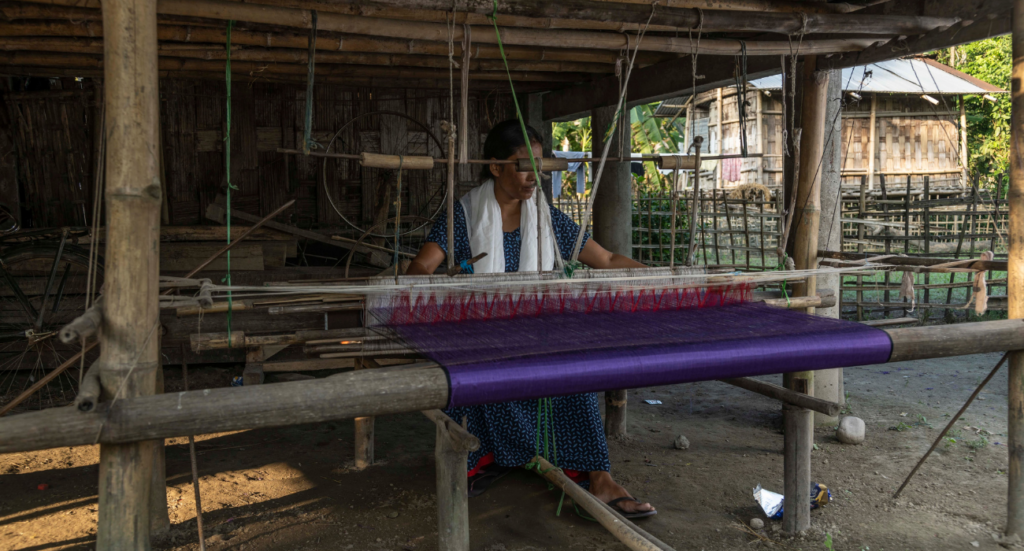
Barsha, a handloom artisan from Assam, once relied entirely on local markets and intermediaries to sell her products, often with limited earnings and little control over pricing. Despite the richness of her craft, her reach remained restricted, and opportunities to connect with wider audiences were minimal.
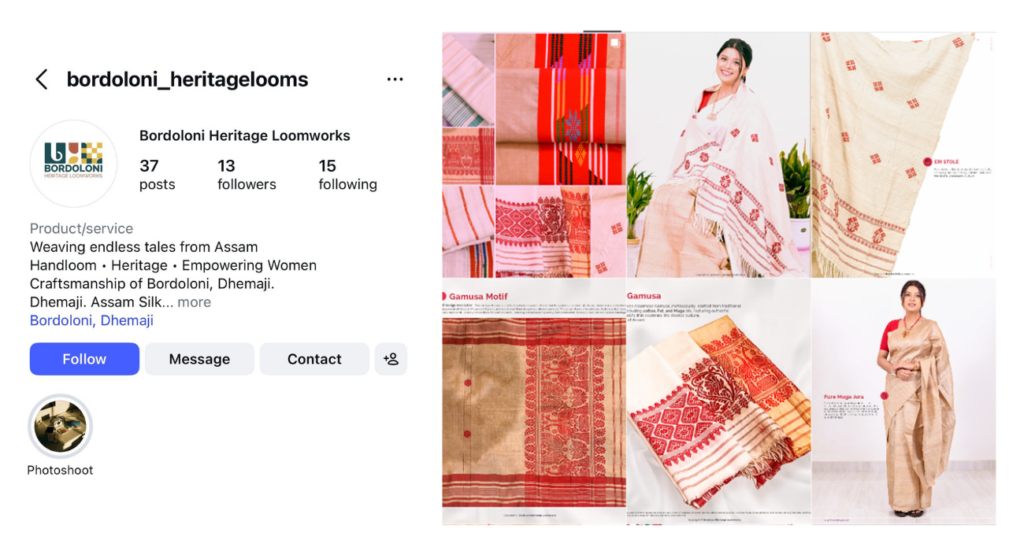
With support from the Foundation for MSME Clusters (FMC), Barsha began her transition into the digital marketplace. Through training in digital marketing, product presentation, and e-commerce onboarding, she established her presence on platforms like ONDC and Instagram under her brand Bordoloni Heritage Looms. Today, she directly engages with customers, showcases her work to a national audience, and manages her own digital storefront—marking a significant shift from dependency to independence. Her journey reflects how the right support can enable artisans to reclaim market access, strengthen their brand identity, and scale their livelihoods.
Weaving Tradition into Innovation: Seetha Krishna’s Story from Pochampally
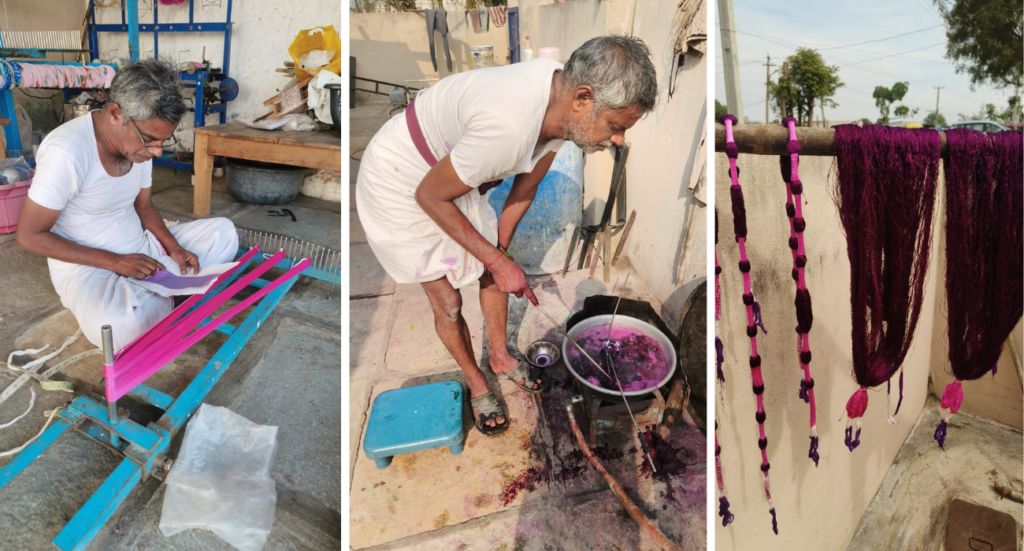
With over 40 years of experience, Seetha Krishna, a master weaver from Pochampally, Telangana, has long been a custodian of the intricate Ikat tradition. Leading a 30-loom unit, he has not only preserved heritage techniques but also sustained livelihoods for fellow artisans in his community.
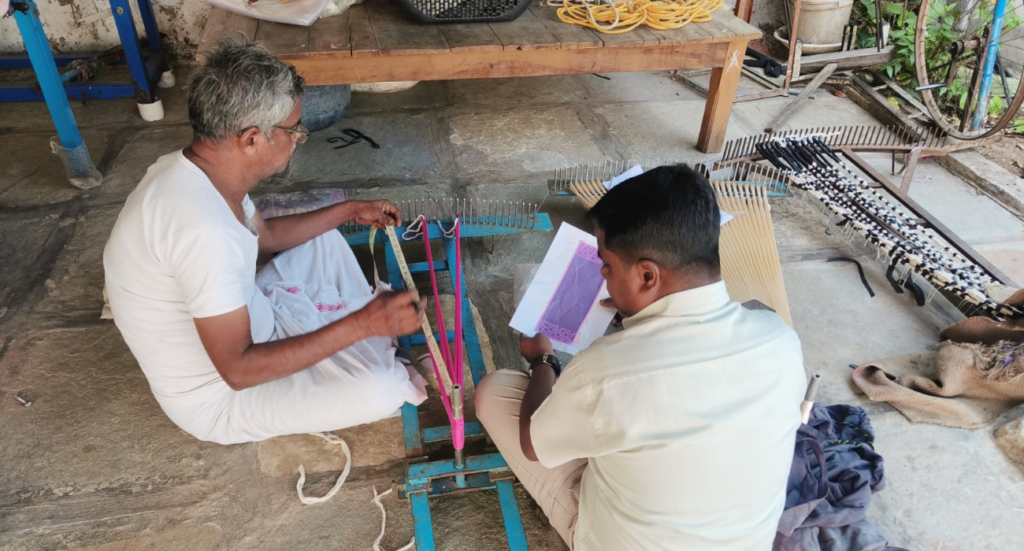
Through his collaboration with the Foundation for MSME Clusters (FMC), Seetha Krishna explored new creative directions—experimenting with contemporary designs while staying rooted in tradition. His development of the P18 Ikat Dupatta stands as a testament to this blend of innovation and craftsmanship. By adapting heritage skills to modern market preferences, he has expanded product offerings beyond sarees and reinforced the relevance of handloom in today’s context. His journey highlights how master artisans can drive both preservation and progress, ensuring that traditional crafts continue to thrive in evolving markets.