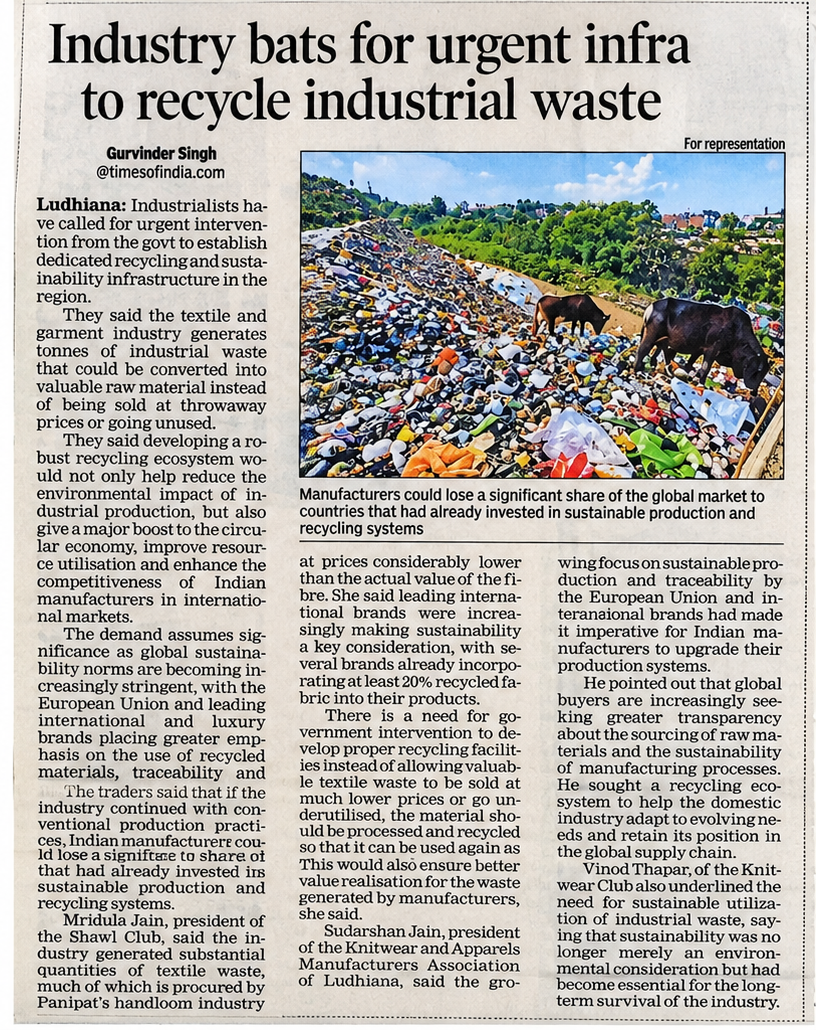


Industry bats for urgent infra recycle industrial waste, Times of India, Ludhiana
By fmadmin
By Gurvinder Singh | The Times of India
Ludhiana: Industrialists have called for urgent intervention from the government to establish dedicated recycling and sustainability infrastructure in the region.
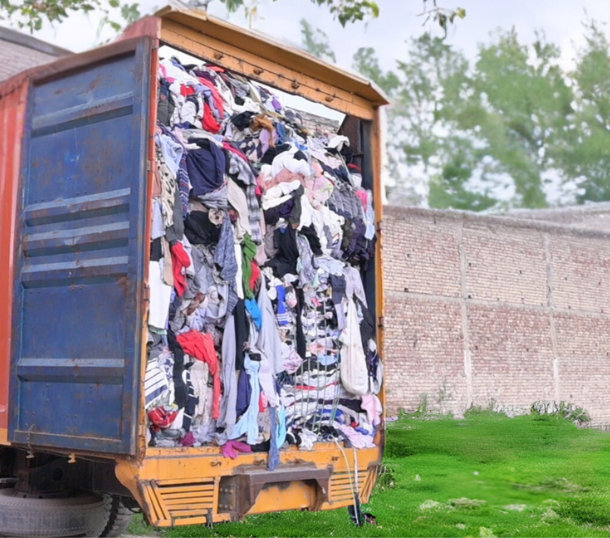
They said the textile and garment industry generates tonnes of industrial waste that could be converted into valuable raw material instead of being sold at throwaway prices or going unused.
They said developing a robust recycling ecosystem would not only help reduce the environmental impact of industrial production, but also give a major boost to the circular economy, improve resource utilisation and enhance the competitiveness of Indian manufacturers in international markets.
The demand assumes significance as global sustainability norms are becoming increasingly stringent, with the European Union and leading international and luxury brands placing greater emphasis on the use of recycled materials, traceability and sustainability.
The traders said that if the industry continued with conventional production practices, Indian manufacturers could lose a significant share of the global market to countries that had already invested in sustainable production and recycling systems.
Mridula Jain, president of the Shawl Club, said the industry generated substantial quantities of textile waste, much of which is procured by Panipat’s handloom industry at prices considerably lower than the actual value of the fibre. She said leading international brands were increasingly making sustainability a key consideration, with several brands already incorporating at least 20% recycled fabric into their products.
There is a need for government intervention to develop proper recycling facilities instead of allowing valuable textile waste to be sold at much lower prices or go underutilised. The material should be processed and recycled so that it can be used again as raw material. This would also ensure better value realisation for the waste generated by manufacturers, she said.
Sudarshan Jain, president of the Knitwear and Apparels Manufacturers Association of Ludhiana, said the growing focus on sustainable production and traceability by the European Union and international brands had made it imperative for Indian manufacturers to upgrade their production systems.
He pointed out that global buyers are increasingly seeking greater transparency about the sourcing of raw materials and the sustainability of manufacturing processes. He sought a recycling ecosystem to help the domestic industry adapt to evolving needs and retain its position in the global supply chain.
Vinod Thapar, of the Knitwear Club, also underlined the need for sustainable utilisation of industrial waste, saying that sustainability was no longer merely an environmental consideration but had become essential for the long-term survival of the industry.